Photo Credit: by Towfiqu barbhuiya, Pexels.com
Millions of Americans rely on prescription medications every day, but rising healthcare costs have caused many patients to rethink how they manage long-term treatment expenses. For people taking medication for high blood pressure, high cholesterol, diabetes, depression, thyroid disease, acid reflux, or other chronic conditions, even a modest monthly copay can become a serious annual cost.
That is one major reason more Americans are switching to generic drugs. Generics are no longer seen as a second-best option. They are now a central part of the U.S. prescription drug system. Generic and biosimilar medicines represent about 90% of prescriptions filled in the United States. Generics and biosimilars have generated $36 billion in savings since 2015, and have been used in almost 2.7 billion days of patient therapy with no unique clinical challenges.
For many patients, the appeal is simple: generic medications offer the same active ingredient and therapeutic effects as brand-name drugs, often at a much lower price.
Still, many patients have understandable questions. Are generic drugs really the same as brand-name drugs? Why are they cheaper? Are they Food and Drug Administration (FDA)-approved? Can switching cause side effects? And when should you talk to your doctor or pharmacist?
Below, we’ll break down why more Americans are choosing generic medications, how generics are approved, what myths still persist, and how patients can make informed decisions about switching.
Key Takeaways About Generic Drugs
• Generic drugs contain the same active ingredients as their brand-name equivalents.
• Food and Drug Administration-approved generic drugs meet standards for quality, strength, purity, and performance.
• Generics often cost significantly less because manufacturers do not have to repeat the same expensive brand-name drug development process.
• Insurance plans often encourage generic use through lower copays and formulary tiers.
• Most people can switch from a brand-name drug to a generic without issue, but patients should speak with a doctor or pharmacist first.
What Are Generic Drugs?
A generic drug is a medication designed to work the same way as an already-approved brand-name drug. According to the FDA, Generic medicines use the same active ingredients as brand-name medicines and work the same way, meaning they have the same risks and benefits as the brand-name version.
In practical terms, a generic drug must generally have the same:
• Active ingredient
• Strength
• Dosage form, such as tablet, capsule, inhaler, or injection
• Route of administration, such as oral, topical, or injectable
• Intended use
• Expected performance in the body
Generic drugs usually become available after a brand-name drug’s patents or exclusivity protections expire. This is why many familiar medications now have widely used generic versions. Examples include atorvastatin instead of Lipitor for cholesterol, metformin instead of brand-name diabetes medications when appropriate, lisinopril instead of brand-name blood pressure medications, and sertraline instead of Zoloft for depression or anxiety.
Brand-Name vs Generic Drugs: What’s the Difference?
Here are the differences between brand-name and generic medications at a glance.
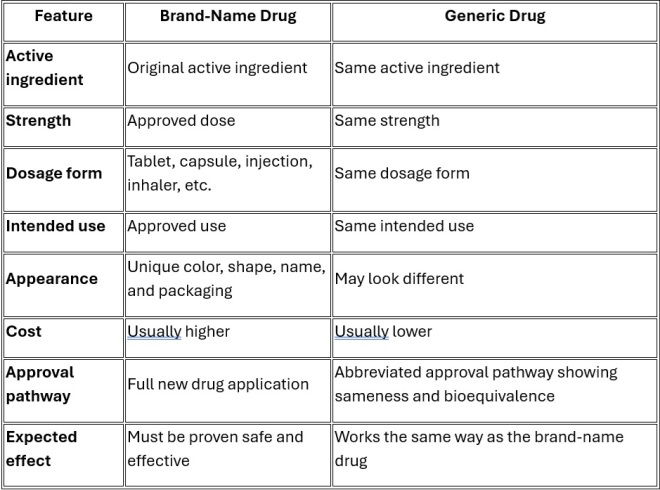
Photo Credit: by KingsBlog
Generic pills may be a different color, shape, or size than the brand-name version. They may also contain different inactive ingredients, such as fillers, dyes, binders, preservatives, or flavorings. However, the active ingredient must be the same, and the drug must meet FDA standards before it can be sold.
Why More Americans Are Choosing Generic Medications
Americans are choosing generic medications for many reasons.
1. Generic Drugs Lower Prescription Costs
Cost is the most obvious reason more Americans are switching to generic drugs. Prescription drug use is extremely common in the U.S. Data from the Centers for Disease Control and Prevention (CDC) shows that 49.9% of people used at least one prescription drug in the past 30 days, while 24.7% used three or more, and 13.5% used five or more.
It’s clear that medication costs add up quickly. A person taking one medication may be able to manage a higher copay. A person taking four, five, or six medications every month may not.
For patients on fixed incomes, people without insurance, and those with high-deductible health plans, generics can make ongoing treatment more manageable. Generic versions of common medications for blood pressure, cholesterol, diabetes, acid reflux, depression, and more can significantly reduce monthly costs.
2. Patients Trust FDA-Approved Generic Drugs More Than Ever
Another reason more Americans are choosing generics is increased trust. Years ago, some patients viewed generics with suspicion. Many assumed that because a medication was cheaper, it must be weaker, less reliable, or lower quality.
Those myths still exist, but awareness has improved. The FDA says its Generic Drugs Program conducts rigorous reviews to ensure that generic medicines meet required standards. The agency also inspects manufacturing plants and monitors drug safety after generic drugs are approved and brought to market.
Generic manufacturers must show that the generic version performs in the body like the brand-name drug. This concept is called bioequivalence. In plain language, bioequivalence means the generic delivers the active ingredient in a way that produces the same clinical effect as the brand-name product.
Pharmacists and doctors have also played a major role in building trust. Many patients first learn that a generic is available when a pharmacist offers the lower-cost option. Doctors also commonly prescribe generics directly. In many cases, the generic name is now more familiar than the original brand name. For example, many patients recognize names like atorvastatin, metformin, lisinopril, levothyroxine, sertraline, and omeprazole without even thinking about the brand-name versions.
3. Insurance Plans Often Favor Generic Medications
Insurance coverage also encourages the use of generic medications. Many health plans use formularies, which are lists of covered medications. These formularies often place drugs into tiers, with lower-tier drugs costing patients less than higher-tier drugs. This puts generics into lower tiers.
This tier system strongly affects patient choices. A generic medication may have a very low copay, while the brand-name version may have a much higher copay, require prior authorization, or not be covered unless the patient has already tried the generic.
For example, a plan may encourage a patient to use generic atorvastatin before covering a more expensive cholesterol medication. The same can happen with medications for blood pressure, diabetes, depression, asthma, acid reflux, and many other conditions.
4. More Brand-Name Drugs Now Have Generic Alternatives
Generic use has also grown as patents on more medications have expired. When patents run out, and generic manufacturers enter the market, patients gain access to lower-cost alternatives.
Over time, this has made generic medications common for many everyday conditions, including:
• High blood pressure
• High cholesterol
• Type 2 diabetes
• Depression and anxiety
• Acid reflux
• Thyroid disease
• Allergies
• Pain and inflammation
As a result, many patients now start treatment with a generic drug rather than switching later.
Are Generic Drugs as Safe and Effective as Brand Names?
In the ways that matter clinically, FDA-approved generic drugs work the same as their brand-name equivalents. A generic drug must have the same active ingredient, strength, dosage form, route of administration, and intended use. Generic medicines have the same risks and benefits as brand-name medicines.
However, “the same” does not mean identical in every visible detail.
Generic drugs may look different. They may have different colors, shapes, sizes, markings, flavors, or packaging.
Generic drugs may also use different inactive ingredients. These ingredients do not provide the main therapeutic effect, but they can matter for some people. A person with an allergy or sensitivity to a dye, lactose, gluten, preservative, or filler should ask a pharmacist to check the inactive ingredient list for their desired generic drug.
For most patients, these differences are not clinically meaningful. But for some, they can matter. This is why patients should pay attention to how they feel after switching and ask questions if a refill suddenly looks different.
Common Myths About Generic Drugs
Despite more people understanding the benefits of generic medications, some myths persist.
Myth 1: Generic drugs are lower quality.
This is one of the most persistent myths about generic medications. A lower price does not mean a lower-quality drug. Generic drugs cost less largely because generic manufacturers do not have to repeat the same expensive clinical development process used to bring the original brand-name drug to market.
Generic drugs must still meet FDA standards for quality, strength, purity, and performance.
Myth 2: Generic drugs are made differently, so they do not work the same.
Generic drugs may be made by different manufacturers and may include different inactive ingredients. However, the active ingredient must be the same as that of the brand-name drug, and the generic must meet FDA performance requirements.
That means two pills may look different, but they are therapeutically equivalent.
Myth 3: Cheaper means less effective.
This myth is understandable because in many areas of life, cheaper products can mean lower quality. But that assumption does not automatically apply to FDA-approved generic drugs.
A generic version of rosuvastatin is not cheaper because it is designed to lower cholesterol less effectively. It is cheaper because the brand-name drug’s exclusivity has ended, other companies can manufacture it, and competition helps lower prices.
Myth 4: If my pill looks different, the pharmacy made a mistake.
This is not necessarily the case. Pharmacies may use different generic manufacturers depending on supply, pricing, and availability. This means your refill may look different even when the medication is correct.
That said, patients should never ignore a concern. If your pill suddenly changes color, shape, size, or imprint, ask the pharmacist to confirm that it
is the correct medication before taking it.
When to Talk to Your Doctor or Pharmacist Before Switching
Many patients can switch from a brand-name drug to a generic without difficulty. However, medication decisions should still be individualized.
You should talk to your doctor or pharmacist before switching, especially if you:
• Take a drug that only works within a very narrow window (has a narrow therapeutic index)
• Use seizure medications, thyroid medications, blood thinners, transplant medications, or certain heart rhythm medications
• Have had side effects after switching manufacturers before
• Have allergies or sensitivities to dyes, fillers, preservatives, lactose, or gluten
• Are pregnant or medically fragile
• Take multiple medications for complex health conditions
• Are confused by a change in pill appearance
How Generic Drugs Save the U.S. Healthcare System Money
Generic drugs do not just save money for individual patients. They also reduce costs for insurers, employers, Medicare, Medicaid, and the healthcare system as a whole.
The Association for Accessible Medicines reported that FDA-approved generic and biosimilar medicines saved patients and the U.S. healthcare system $445 billion in 2023 and more than $3 trillion over the previous 10 years.
For patients, this can mean lower out-of-pocket costs. For employers, it can mean lower health plan spending. For public programs, it can reduce pressure on Medicare and Medicaid. Overall, the healthcare system can improve access to essential medications.
That is why generic drugs are not only a patient affordability issue. They are also a healthcare policy issue.
Bottom Line: Generic Drugs Are Mainstream, Affordable, and Trusted
More Americans are switching to generic drugs because affordability matters, trust has grown, and the healthcare system increasingly depends on generics to control costs. For many common conditions, generic medications offer the same active ingredient and clinical effect as brand-name drugs at a significantly lower price.
Still, patients should not treat medication switches casually. A generic may look different, use different inactive ingredients, or come from a different manufacturer than the last refill. Most of the time, that is not a problem. But for people with allergies, complex medical conditions, or medications with a narrow therapeutic index, it is worth asking questions.
The best approach is simple: do not assume the most expensive medication is the best one, and do not assume a switch is automatically right for you. Ask your doctor or pharmacist whether a generic option is available, appropriate, and affordable.
For many Americans, that conversation can lead to meaningful savings without sacrificing quality of care.
FAQ About Generic Drugs
Do you have questions about generic drugs? Check out the answer below.
Are generic drugs safe?
Yes, generic drugs are safe. FDA-approved generic drugs must meet standards for quality, strength, purity, and performance. The FDA also reviews generic drugs before approval, inspects manufacturing facilities, and monitors safety after approval.
Why are generic drugs cheaper?
Generic drugs are cheaper mainly because generic manufacturers do not have to repeat the same expensive research and development process used to bring the original brand-name drug to market. Once patents or exclusivity protections expire, competition can help lower prices.
Do generic drugs work the same?
In general, yes, generics do work the same as brand-name drugs. Generic drugs must have the same active ingredient as the brand-name drug. This means they work the same way and provide the same clinical benefit.
Can generic drugs have different side effects?
They are expected to have the same risks and benefits because they contain the same active ingredient. However, inactive ingredients can differ. In rare cases, a person may react to a dye, filler, preservative, or other inactive ingredient. Patients with known allergies or sensitivities should ask a pharmacist to review the ingredient list.
Why do generic pills look different?
Generic pills may look different because they are made by different manufacturers and generally cannot replicate the exact appearance of the brand-name drug. Color, shape, size, markings, and packaging can vary, but those differences don’t change how the active ingredient works.
Are generics approved by the FDA?
Yes, in the United States, generic drugs must be reviewed and approved by the FDA before they can be sold. The FDA evaluates whether the generic meets requirements for sameness, bioequivalence, quality, and manufacturing.
Can I switch from a brand-name drug to a generic?
Many patients can switch safely, but it is best to ask your doctor or pharmacist first. This is especially important if you take a narrow therapeutic index drug, have allergies to inactive ingredients, take multiple medications, or have had problems with medication switches before.
Sources
1. Association for Accessible Medicines. (2026, March 25). Generic and biosimilar medicines save $445 billion in 2023 | Association for Accessible Medicines. https://accessiblemeds.org/resources/press-releases/generic-and-biosimilar-medicines-save-445-billion/
2. Therapeutic Drug Use. (2025, January 10). National Center for Health Statistics. Retrieved May 18, 2026, from https://www.cdc.gov/nchs/fastats/drug-use-therapeutic.htm
3. U.S. Food and Drug Administration. (2021, March 16). Generic drugs: questions & answers. U.S. Food And Drug Administration. Retrieved May 18, 2026, from https://www.fda.gov/drugs/frequently-asked-questions-popular-topics/generic-drugs-questions-answers